
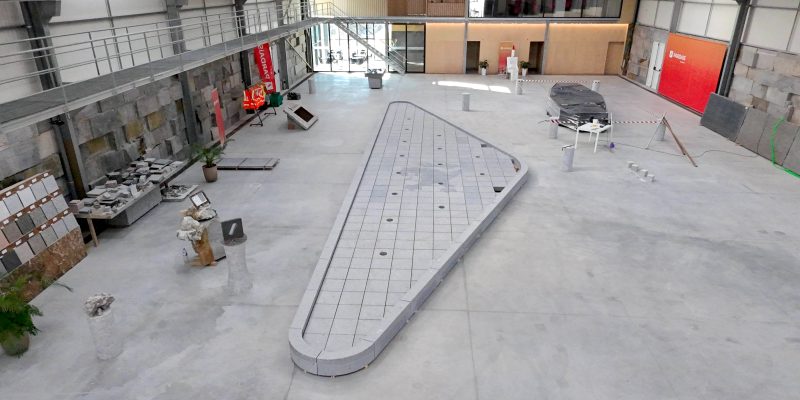
Dry pre-assembly verifies dimensions, joints, and interfaces before delivery, reducing installation risk, rework, and delays in natural stone façade projects.
Stone projects often look perfect in drawings and CAD models but reveal their true complexity during installation. A 3mm tolerance error, misaligned joint, or interface conflict with metal fixings can turn into hours of rework, delays, and budget overruns.
Dry pre-assembly solves this by testing the full stone system in the factory before it reaches the site. Instead of discovering problems when cranes are waiting and other trades are on hold, issues are identified and corrected when fixes are still simple and inexpensive.
What Dry Pre-Assembly Is
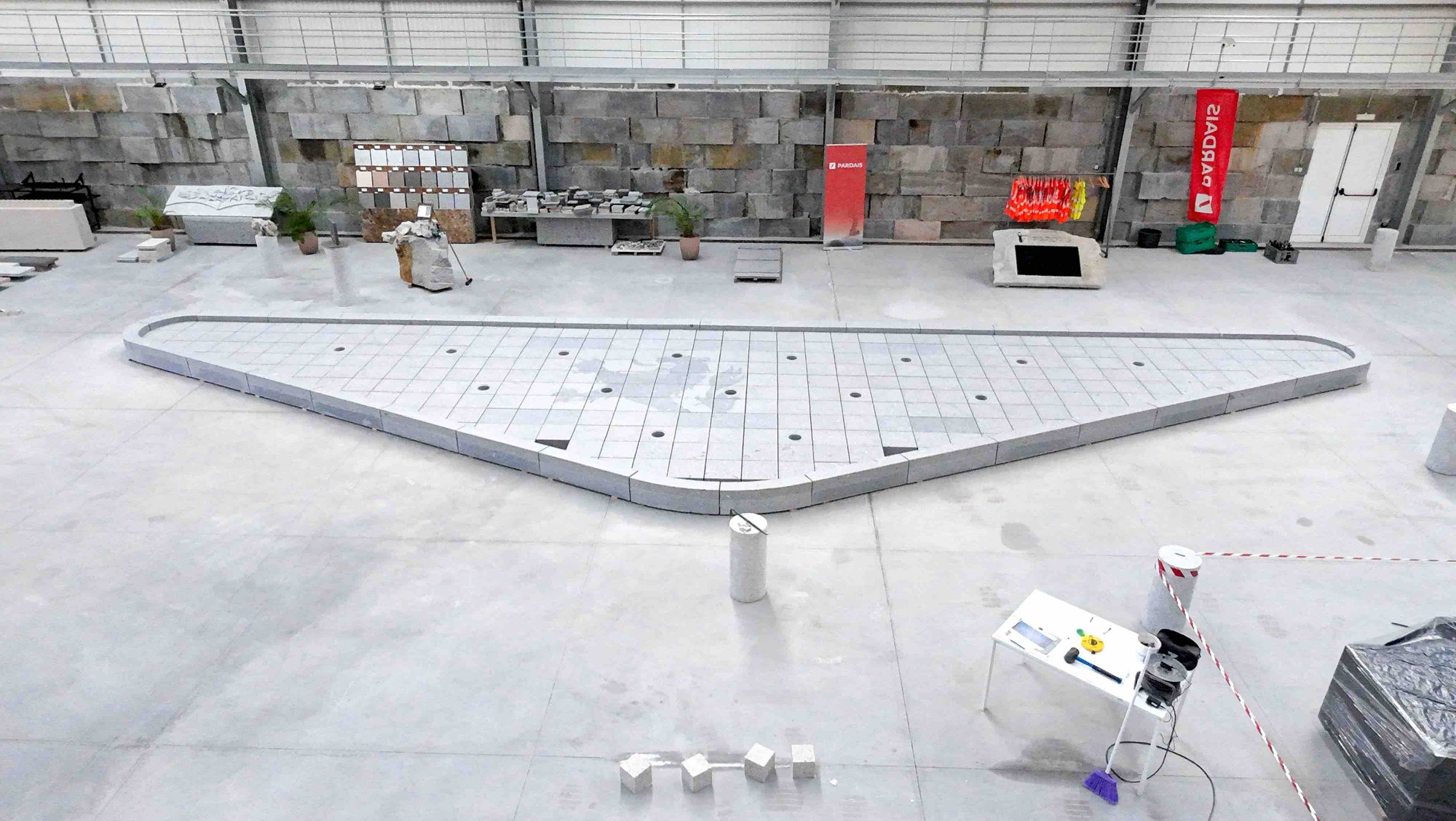
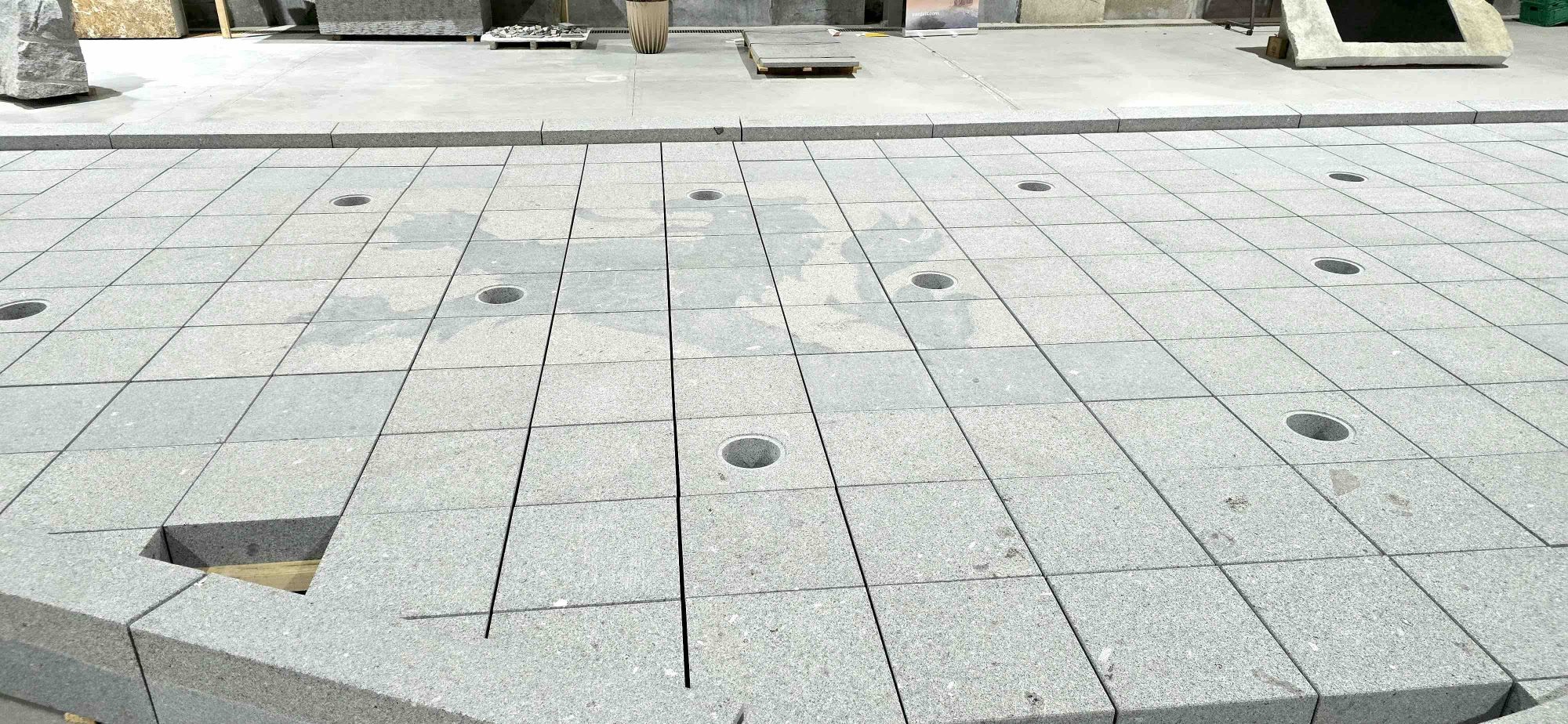
Dry pre-assembly assembles stone elements in the factory without mortar, adhesive, or final fixings. The pieces are positioned exactly as they will be on site to test fit, alignment and overall system performance.
This is not a mock-up or prototype. It is a full-scale verification of production pieces before dispatch, ensuring dimensional accuracy, joint consistency and installation logic.
At PARDAIS, every complex project uses this process to bridge the gap between technical drawings and physical reality.
Why It Matters for Architects
Architects design with precision, but natural stone introduces variables that digital models cannot fully predict:
- Visual alignment between pieces under real lighting conditions
- Joint behavior with actual thicknesses and tolerances
- Interface coordination with fixings, frames and adjacent materials
Dry pre-assembly confirms the design is buildable. It reduces the “interpretation gap” between office and factory, giving architects confidence that their visual and technical intent will be delivered.
Why It Matters for Contractors
For contractors, dry pre-assembly is risk insurance:
On-site correction = 5-10x factory correction cost
Site delay = cascading impact on other trades
Rework = budget overrun + schedule pressure
Factory verification eliminates these risks by:
- Confirming all pieces fit as planned
- Validating installation sequence and logic
- Numbering components for error-free assembly
- Documenting the system for site reference
What Is Checked During Pre-Assembly
The process systematically verifies every critical aspect:
✓ Dimensional accuracy (±1mm tolerance)
✓ Joint widths and alignments
✓ Fixing point locations
✓ Interface with metal/glass/concrete
✓ Piece sequencing and numbering
✓ Visual consistency of full assembly
✓ Weight distribution and handling
Each check creates a record that travels with the shipment, giving installers clear guidance.
Risks It Helps Avoid
Dry pre-assembly prevents the most common (and costly) stone installation failures:
| Problem | Without Pre-Assembly | With Pre-Assembly |
| Misaligned panels | Site grinding/shimming | Caught in factory |
| Tolerance stack-up | Progressive misalignment | System-wide verified |
| Missing fixings | Installation halt | Positions confirmed |
| Interface conflicts | Rework with other trades | Tested before shipment |
| Sequencing errors | Delays + labor waste | Numbered + documented |
Where It Is Most Valuable
Dry pre-assembly delivers highest ROI in complex scenarios:
- Façade systems (ventilated, anchored, cassette)
- Monumental projects (temples, memorials)
- Public works (large paving, stairs, urban furniture)
- Heritage restoration (precise matching required)
- International logistics (shipping corrections impossible)
- Tight deadlines (zero tolerance for site delays)
PARDAIS Approach
PARDAIS operates a dedicated pre-assembly pavilion where full façade panels, stair flights and complex stone assemblies are dry-fitted at real scale.
Our process integrates:
- Digital verification (from CAD files)
- Physical assembly (production pieces)
- Tolerance measurement (laser + manual)
- Photographic documentation
- Numbering + packing for site sequence
Result: Stone arrives site-ready, numbered and verified.
Conclusion
Dry pre-assembly transforms stone projects from potential risk to predictable execution. It catches problems when they cost pennies, not thousands.
For architects: design confidence.
For contractors: installation certainty.
For clients: budget and schedule control.
Contact us to support your complex stone projects with technical precision and pre-assembly verification.